Preview
640 × 400 pixels
Create this example
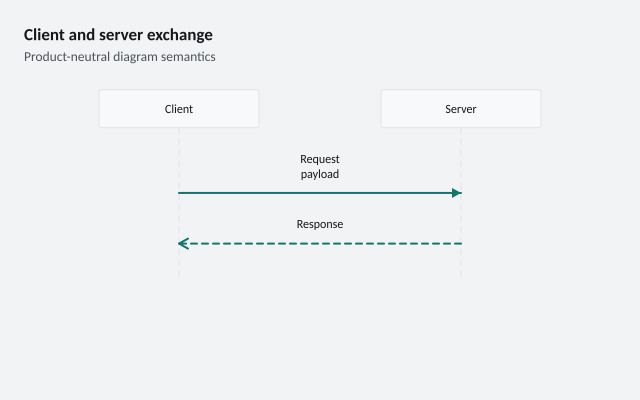
Create a console project, add the ChartForgeX package, and replace Program.cs with this source. Run it to write SVG, PNG and HTML with the default system fonts.
For the same typography as the gallery, download the gallery-font recipe and copy the gallery’s fonts directory beside your program.
using System;
using System.Collections.Generic;
using System.Globalization;
using System.IO;
using System.Linq;
using ChartForgeX.Core;
using ChartForgeX.Primitives;
using ChartForgeX.Rendering;
using ChartForgeX.Themes;
using ChartForgeX.Topology;
using ChartForgeX.Typography;
using ChartForgeX.VisualArtifacts;
using ChartForgeX.VisualBlocks;

var mode = VisualThemeMode.Light;
var theme = VisualTheme.Graphite();
var model = SimpleSequenceRecipe.Create("feasibility", mode);
var context = new VisualRenderContext(
    new VisualLayoutOptions(new VisualSize(640, 400)), theme, mode,
    new VisualFrame("Client and server exchange", "Product-neutral diagram semantics", showLegend: false, showSurface: false));
var prepared = model.Prepare(context);
File.WriteAllText("visual.svg", prepared.ToSvg());
File.WriteAllBytes("visual.png", prepared.ToPng());
File.WriteAllText("visual.html", prepared.ToArtifact("example", VisualArtifactKind.Sequence).ToHtmlPage());

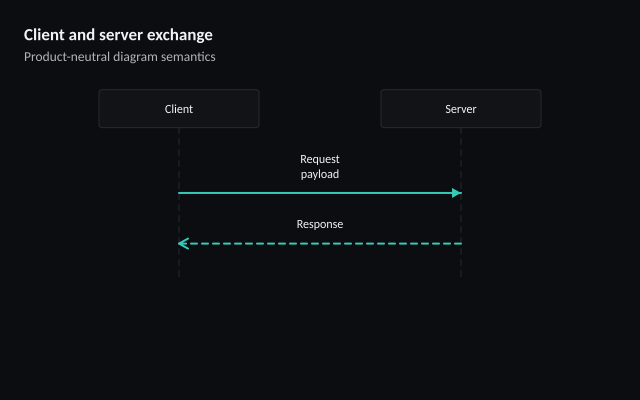
/// <summary>Creates a two-participant exchange with a multiline request and dashed return.</summary>
public static class SimpleSequenceRecipe {
    /// <summary>Creates the simple client and server sequence model.</summary>
    /// <param name="variant">Use wide or feasibility for the simple sequence.</param>
    /// <param name="mode">The rendering mode; diagram colors are resolved when the model is prepared.</param>
    public static SequenceArtifact Create(string variant = "wide", VisualThemeMode mode = VisualThemeMode.Light) {
        if (variant is not ("wide" or "feasibility"))
            throw new ArgumentOutOfRangeException(nameof(variant), variant, "Use wide or feasibility.");

        return SequenceArtifact.Create("session").WithSize(640, 400)
            .AddParticipant("client", "Client")
            .AddParticipant("server", "Server")
            .AddMessage("client", "server", "Request\npayload")
            .AddMessage("server", "client", "Response", SequenceArtifactMessageLineStyle.Dashed, SequenceArtifactMessageKind.Return);
    }
}
using System;
using System.Collections.Generic;
using System.Globalization;
using System.IO;
using System.Linq;
using ChartForgeX.Core;
using ChartForgeX.Primitives;
using ChartForgeX.Rendering;
using ChartForgeX.Themes;
using ChartForgeX.Topology;
using ChartForgeX.Typography;
using ChartForgeX.VisualArtifacts;
using ChartForgeX.VisualBlocks;

var mode = VisualThemeMode.Dark;
var theme = VisualTheme.Graphite();
var model = SimpleSequenceRecipe.Create("feasibility", mode);
var context = new VisualRenderContext(
    new VisualLayoutOptions(new VisualSize(640, 400)), theme, mode,
    new VisualFrame("Client and server exchange", "Product-neutral diagram semantics", showLegend: false, showSurface: false));
var prepared = model.Prepare(context);
File.WriteAllText("visual.svg", prepared.ToSvg());
File.WriteAllBytes("visual.png", prepared.ToPng());
File.WriteAllText("visual.html", prepared.ToArtifact("example", VisualArtifactKind.Sequence).ToHtmlPage());

/// <summary>Creates a two-participant exchange with a multiline request and dashed return.</summary>
public static class SimpleSequenceRecipe {
    /// <summary>Creates the simple client and server sequence model.</summary>
    /// <param name="variant">Use wide or feasibility for the simple sequence.</param>
    /// <param name="mode">The rendering mode; diagram colors are resolved when the model is prepared.</param>
    public static SequenceArtifact Create(string variant = "wide", VisualThemeMode mode = VisualThemeMode.Light) {
        if (variant is not ("wide" or "feasibility"))
            throw new ArgumentOutOfRangeException(nameof(variant), variant, "Use wide or feasibility.");

        return SequenceArtifact.Create("session").WithSize(640, 400)
            .AddParticipant("client", "Client")
            .AddParticipant("server", "Server")
            .AddMessage("client", "server", "Request\npayload")
            .AddMessage("server", "client", "Response", SequenceArtifactMessageLineStyle.Dashed, SequenceArtifactMessageKind.Return);
    }
}